Corrosion tests accredited by ENAC: technical prevention at the service of industrial safety
April 1, 2026
Corrosion tests accredited by ENAC: technical prevention at the service of industrial safety
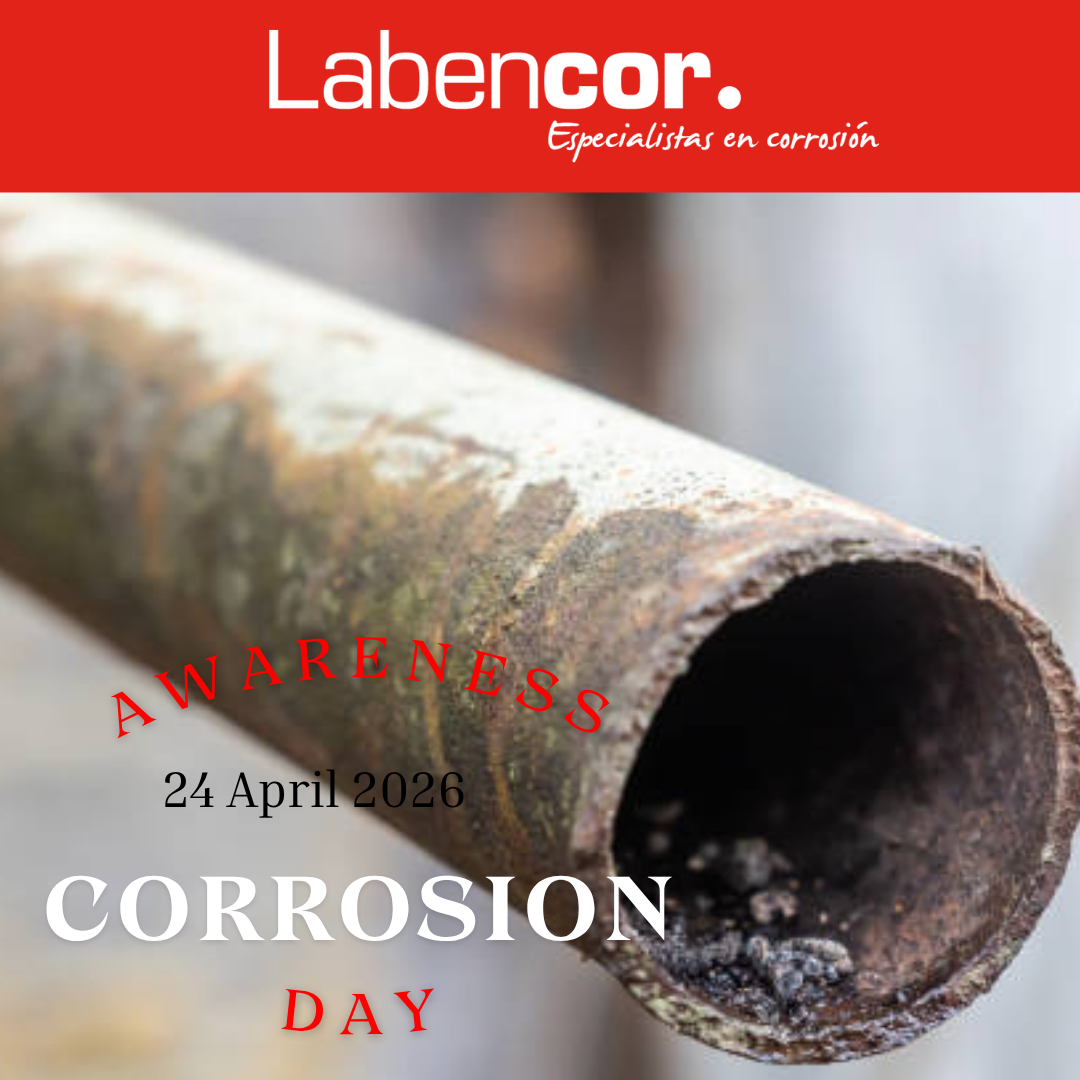
In the field of industrial safety, corrosion does not usually initially manifest as a large fracture or visible failure.
Instead, it starts quietly, through microcracks, inclusions, discontinuities in coatings or seemingly insignificant surface imperfections.
These small defects can eventually become the source of corrosive processes that compromise the structural integrity of equipment, pipelines, deposits, or critical infrastructure.
In this context, prevention is not an option, but a strategic necessity.
From the point of view of safety engineering, corrosion represents a progressive degradation mechanism that can affect both mechanical strength and the tightness and functionality of materials. Its impact is not limited to physical deterioration: it can lead to leaks, operational failures, unplanned outages and even incidents with economic, environmental or personal consequences.
Thus, early detection of incipient phenomena is key to any effective preventive maintenance and risk management policy.
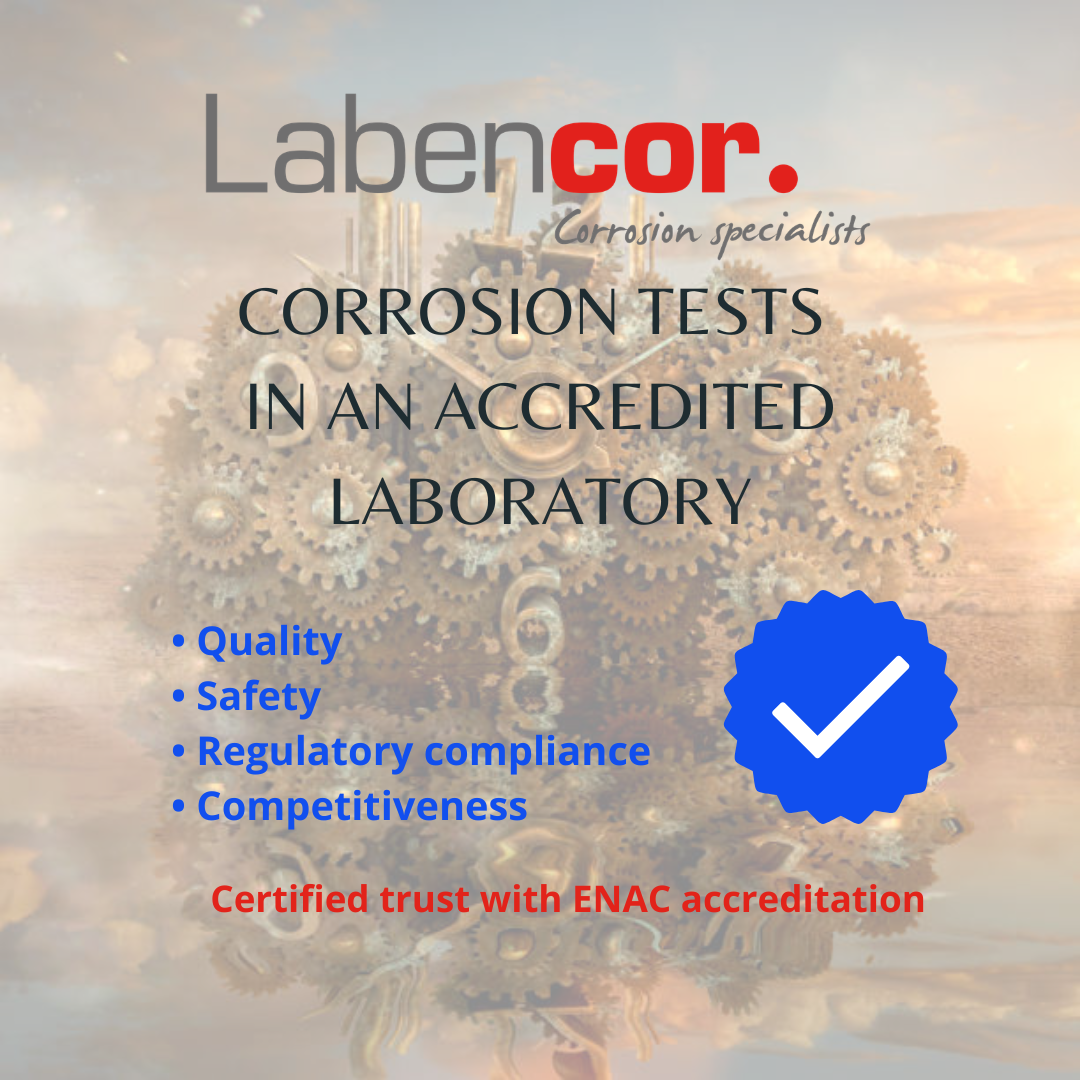
The difference between conducting a trial and performing it with assurance lies in the quality framework under which it is performed.
The accreditation granted by the National Accreditation Authority (ENAC) certifies that the laboratory operates in accordance with internationally recognized technical standards.
In the case of Labencor, this accreditation implies that:
- Corrosion tests are carried out under validated and controlled procedures.
- The technical staff has demonstrated specific competence in the applied methods.
- The equipment is calibrated and subjected to metrological control.
- The results obtained are technically valid, traceable and internationally comparable.
- The quality management system has been externally evaluated and meets strict regulatory requirements.
For industrial companies, this guarantee provides legal and technical confidence in approval processes, product certification and regulatory compliance.
Corrosion tests allow simulating, under controlled and accelerated conditions, the behavior of materials and coatings against aggressive environments.
Among the most common methods are:
- Climate tests Humidity / Temperature
- Moisture and condensation tests: UNE-EN ISO 6270-2, UNE-EN ISO 6270-1, as well as those specific to automotive and other customers.
- Salt spray tests: UNE-EN ISO 9227 NSS, ASTM B117, JIS Z 2371, etc.
- Tests of acetic salt mist, cuproacetic: According to UNE-EN ISO 9227 AASS, CASS,…
- Kesternich tests: According to UNE-EN ISO 22479 (replaces ISO 6988 and DIN 50018), ISO 3231,…
- Cyclic corrosion tests: According to Volkswagen standards PV1210, PV1209, PV1200, PV 2005
- Cyclic corrosion tests: According to Mercedes standard ISO 11997-1 Cycle B , (former VDA 621-415), UNE-EN ISO 11997-3 (replacing DIN 55635), VDA 233-102,…
- Other cyclic corrosion tests: According to Renault D17 2028 cycle ECC1, GMW 14872, Nissan, Ford CETP 00.00-L-467, Volvo 1027, 1449, STD 423-0014, SAE J2334,… Stone impact test: according to UNE-EN ISO 20567-1.
These procedures are not limited to a visual assessment; they follow standardized protocols that identify incipient deteriorations before they evolve into critical failures.
In this way, organizations can:
- Compare the performance of different protection solutions.
- Validate technical specifications.
- Optimize maintenance plans.
- Reduce the probability of failures.
Risk anticipation is one of the fundamental pillars of modern industrial security.
Early detection of a coating deficiency or material vulnerability can prevent much more serious consequences in the future.
Proven corrosion testing not only provides technical data; it offers strategic information for decision-making, investment planning and asset protection.
Ultimately, in the face of a silent but potentially critical phenomenon such as corrosion, methodological rigor and official accreditation become essential tools to reinforce the reliability, safety and sustainability of industrial installations.