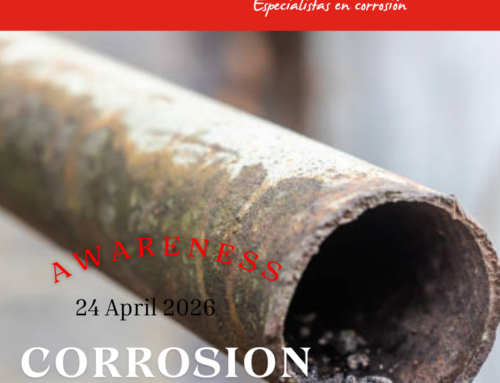
COMMON MYTHS
ABOUT
CORROSION
October 02, 2026
🔩 COMMON MYTHS ABOUT CORROSION
At Labencor, we spend our days analyzing corrosion in the laboratory. And there are some widespread beliefs that, when you look at the data, simply don’t hold up.
Here are 6 myths we still hear:
1️⃣ “Stainless steel doesn’t corrode”
False. It corrodes less, but it is not immune. In chloride-rich environments (seawater, de-icing salts), it can suffer from pitting or crevice corrosion, just like any other metal.
2️⃣ “If you can’t see rust, there’s no corrosion”
Stress corrosion cracking and intergranular corrosion can progress inside the material with barely any visible signs on the surface. The damage is sometimes only discovered when it has already become structural.
3️⃣ “All coatings provide the same protection”
Not at all. Their effectiveness depends on the type of coating, its thickness, surface preparation, and the exposure environment. A poorly applied coating can fail sooner than having no coating at all.
4️⃣ “Corrosion is just an aesthetic problem”
Above all, it is a safety and cost issue. It can compromise the structural integrity of a component and lead to downtime, replacements, and risks that multiply the initial cost.
5️⃣ “A material performs the same way in any environment”
The same material can behave very differently depending on humidity, temperature, salinity, or contact with other metals (galvanic corrosion). That is why standardized testing exists.
6️⃣ “Corrosion testing is only for large industries”
Any sector that uses metal outdoors or in humid or industrial environments can benefit from knowing how its material will age before it fails in service.